

Archaeology students highlight the first challenges and learnings of international academic mobility
At the beginning of March, two students from the Federal University of Rio Grande began the academic semester they will spend at foreign universities. Gabriel Calgaro and Murilo Barcelos were selected through the ESCALA Program to undertake academic mobility at Universidad de la República (UDELAR), in Uruguay, and Universidad Nacional del Nordeste (UNNE), in Argentina, respectively. Currently, the ESCALA initiative has established itself as one of the main opportunities for academic mobility for FURG students.
In their first days abroad, exchange students begin a process of adapting to a new routine and language, experiencing the typical discoveries of an international exchange. In reports shared with REINTER, the students describe how this process has been since their arrival.
To feel more confident at the university, Gabriel chose to arrive a few days before classes began, allowing him to get to know and adapt to the city of Montevideo. In his first days as a UDELAR student, he highlights contact with different cultures as a positive aspect of the experience. “Currently, I live with an Argentine, a French, and a Spanish roommate, and even at home there is a great exchange of customs and ways of life. In addition, in these days I have met people from several countries, such as Finland, Italy, Mexico, Chile, Spain, France, Russia, and Germany, which has been very enriching,” he says.
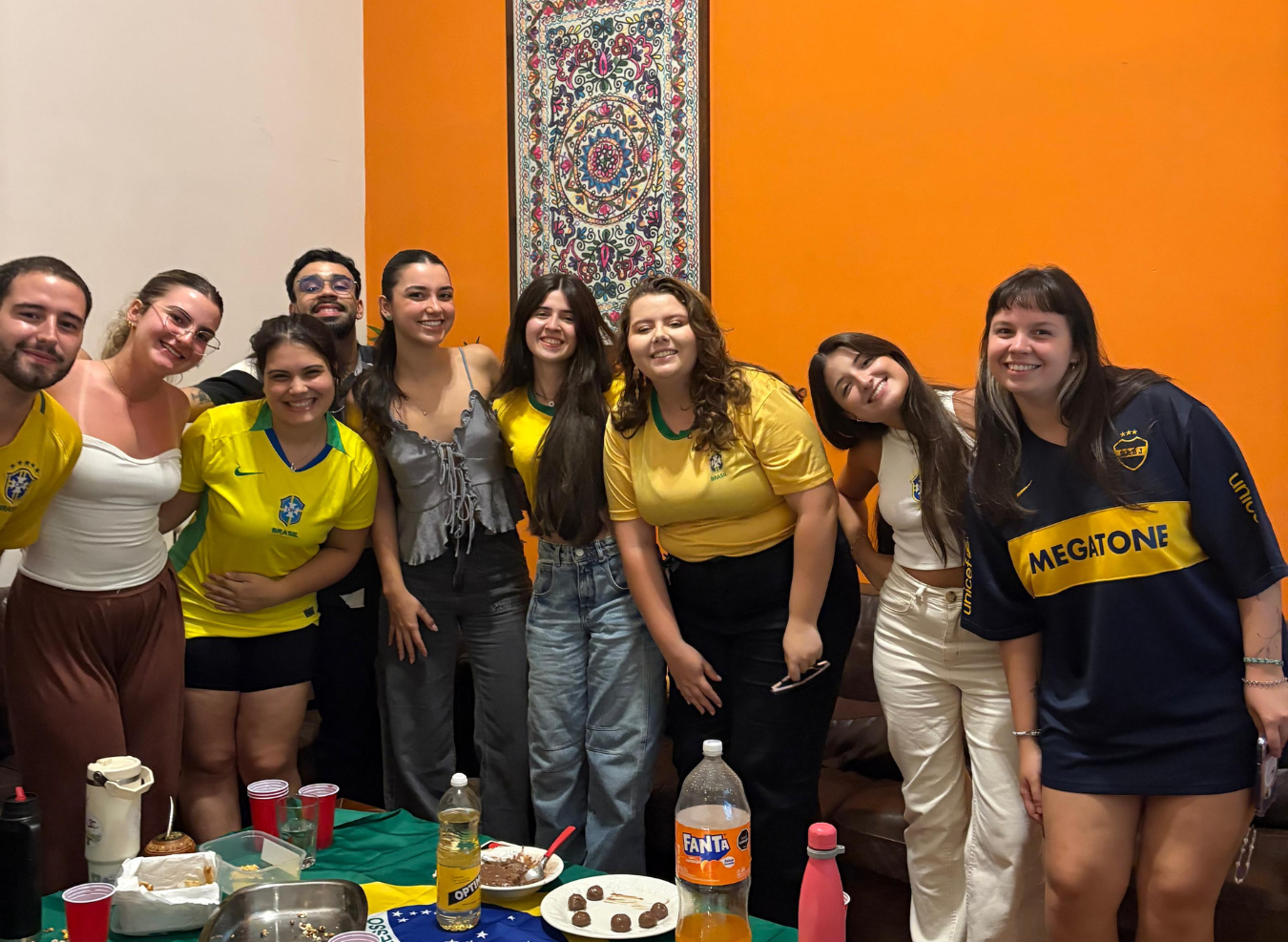
Gabriel and fellow exchange students at Universidad de la República
The student also comments on the challenge of language, one of the main concerns among exchange students. “Regarding Spanish, I thought it would be easier at first, but the Spanish spoken in Uruguay is different from what we usually learn in high school, so I had to get used to some things, such as the ‘ll’ pronounced as ‘sh’ and other small differences in speech.”
Despite limited familiarity with phonetic variations in daily use, Gabriel highlights daily progress as a key part of the process: “Even so, it has been very encouraging to realize that every day I understand more and can communicate better, starting to have more complete conversations in everyday life.”
Murilo, on the other hand, joined the mobility program to work on outreach projects at the Institute of Geo-History at UNNE and to develop research in Colonial History and Regional Archaeology. Less than a month into his stay in Resistencia, capital of the Chaco province, the student reports that the exchange has already provided cultural experiences with students from various countries.
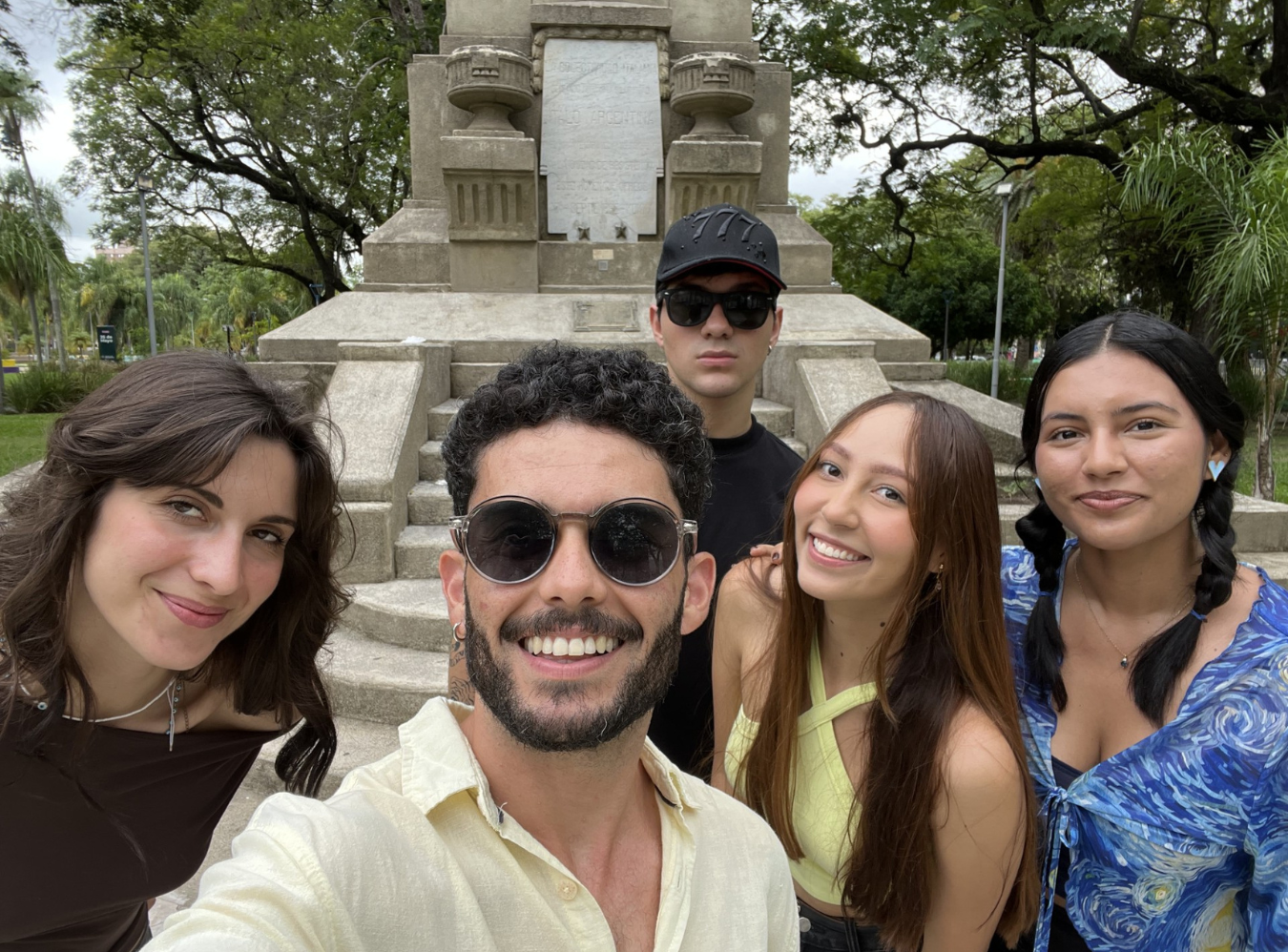
Murilo and fellow exchange students at a monument in the city of Resistencia
Murilo explains that, as a multi-campus university located in Resistencia and Corrientes, UNNE fosters even more interaction among students, bringing together people from Uruguay, Paraguay, Spain, Italy, Mexico, Colombia, and Brazil.
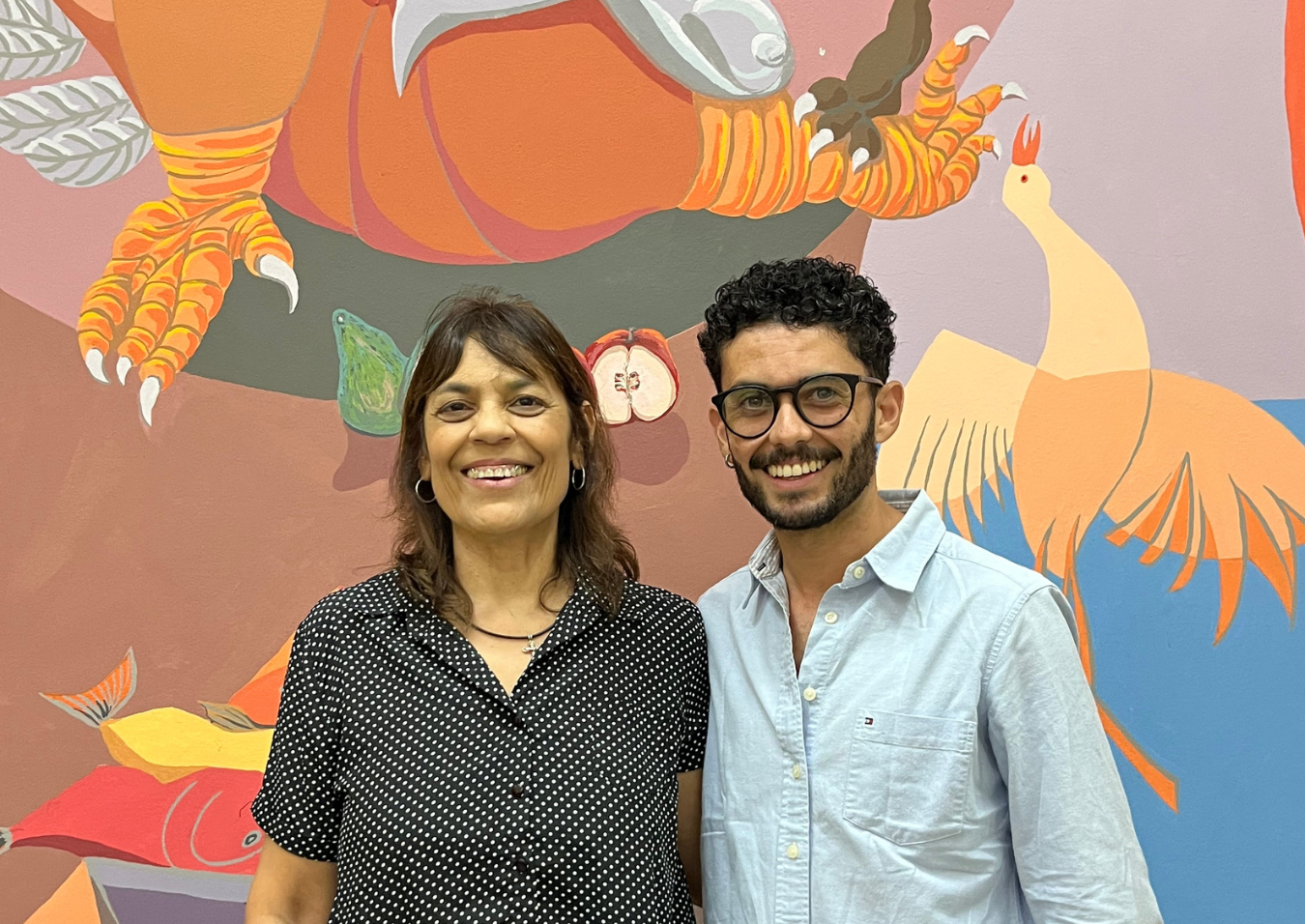
Murilo and his advisor at Universidad Nacional del Nordeste, Professor Maria Laura Salinas
The student also highlights the welcoming nature of the Argentine university, which, according to him, shares similarities with FURG, especially in its social commitment to students.“Beyond educational or scientific exchanges, the program promotes cultural sharing among international students, which may be the greatest legacy of this experience,” he says.
By participating in the ESCALA Program, students expand not only their academic training but also develop intercultural skills, autonomy, and new worldviews. In addition, they strengthen institutional ties between participating universities, contributing to the development of international networks in teaching, research, and outreach.